
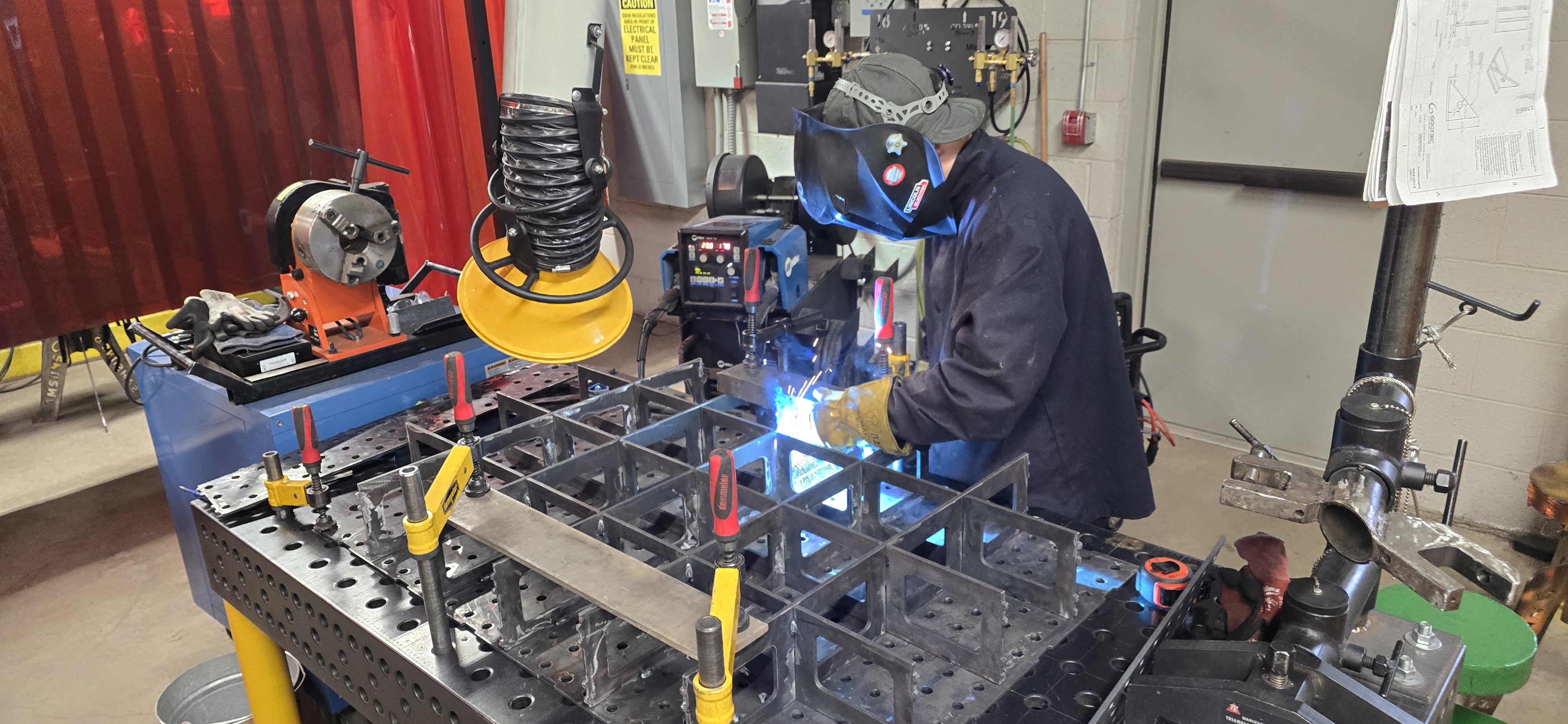
Basic metal fabrication tools and equipment utilizing various measuring tools, geometric nomenclature, basic layout and assembly skills along with shape construction, and triangulation from scale drawings, advanced metal fabrication tools, developing assemblies and sub-assemblies from working prints using various fabrication processes. Identify individual parts and weldments utilizing materials lists. Additionally: tools of rigging, and lifting, hardware, slings, hoists, ladders and scaffolding, weld distortion control, and basic CNC programming will be incorporated.
- Teacher: Gary Gouin
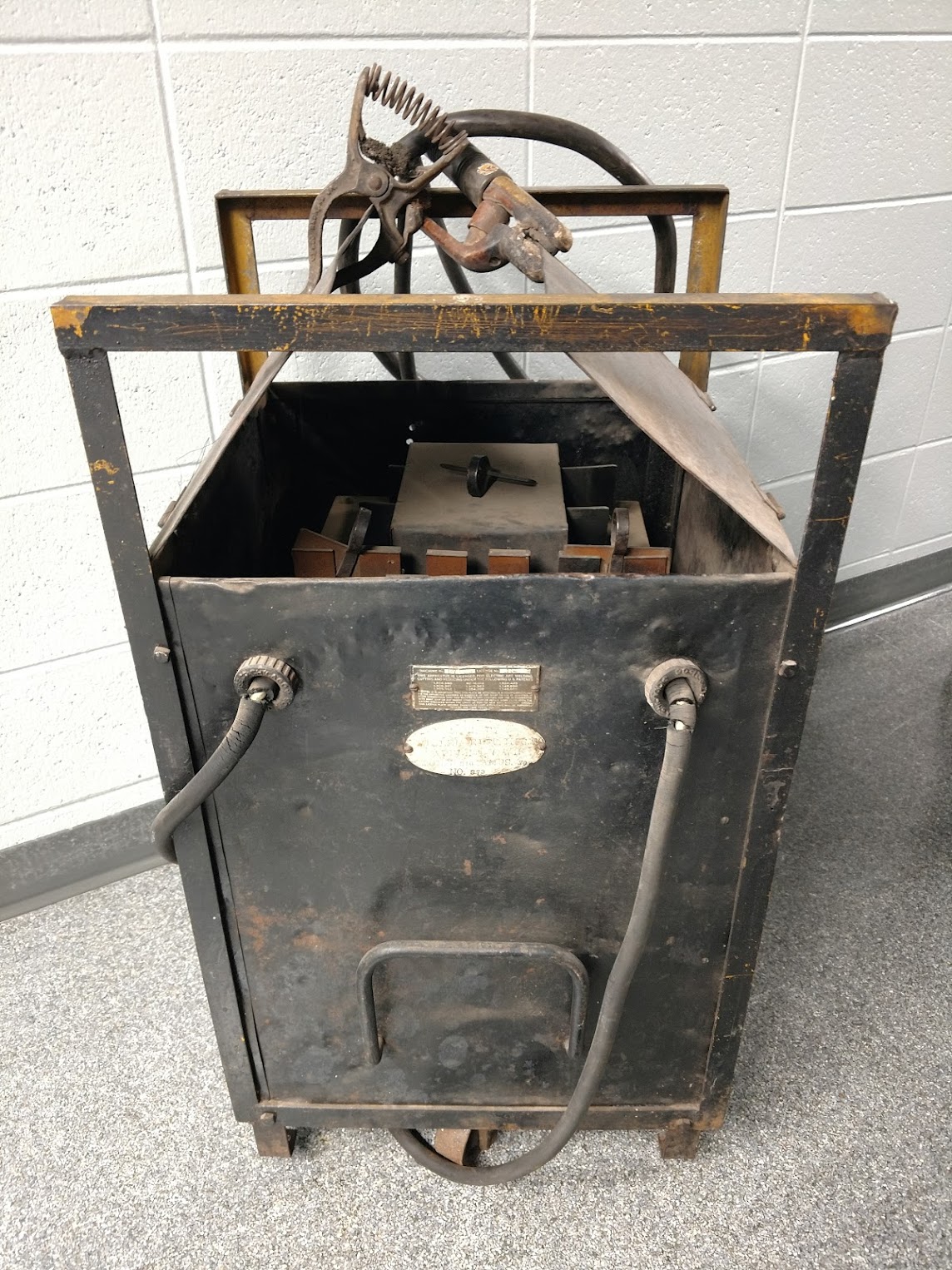
Focus on Shielded Metal Arc Welding (SMAW) process: electrode selection and application, equipment inspection and operation, welding current and polarity selection, weld joint types, and all-position lab modules geared towards qualification testing.
- Teacher: Gary Gouin
- Teacher: Jessica Manier
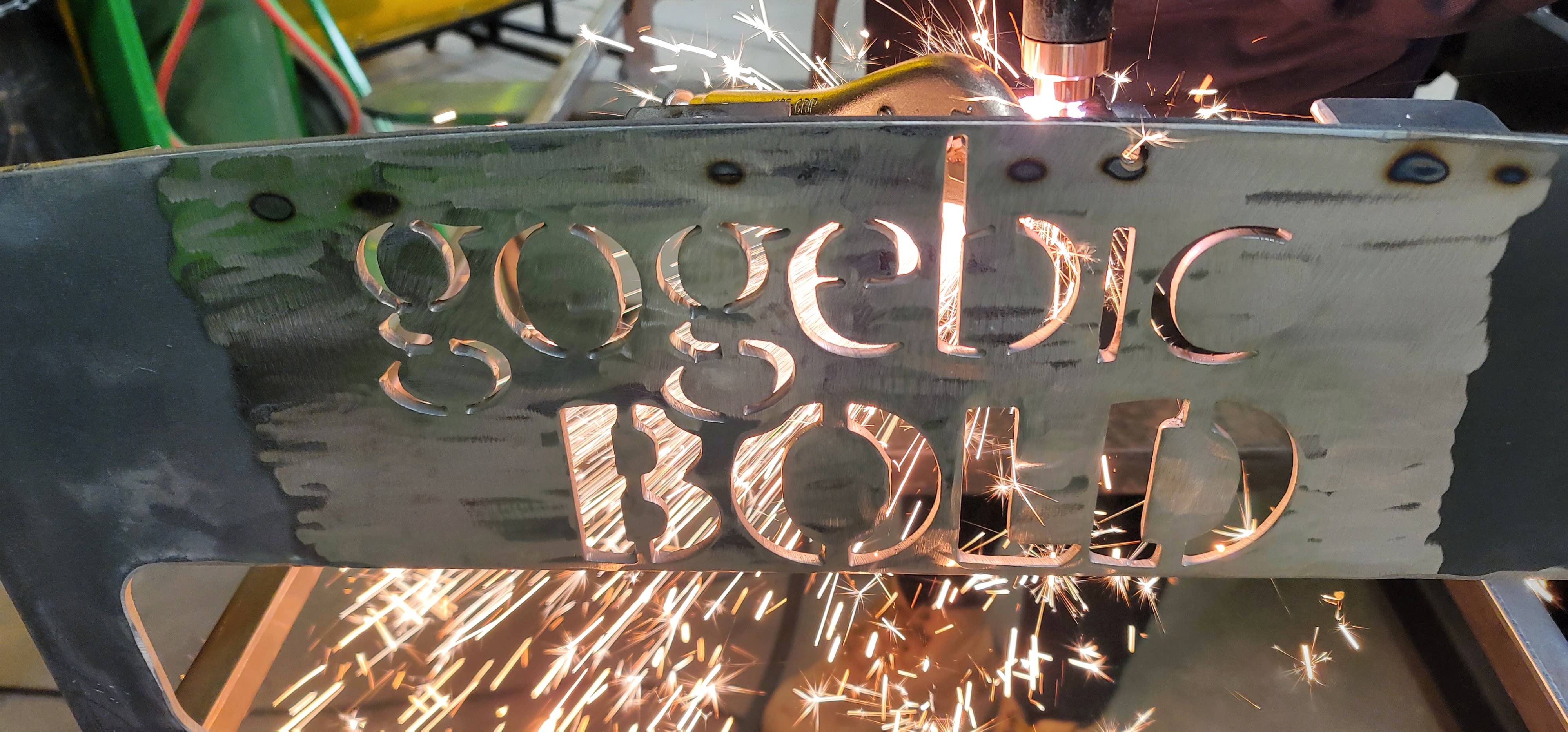
Instruction and practice of equipment inspection, maintenance, repair and set up for manual and mechanized oxy-fuel gas cutting (OFC), manual and CNC plasma arc cutting (PAC) and manual air carbon arc cutting (CAC-A). Instruction and practice soldering and brazing carbon steel, stainless steel and copper using oxy-fuel equipment. Instruction and practice in the production of cuts on carbon steel, stainless steel and aluminum using PAC equipment. Instruction and practice cutting, scarfing and gouging carbon steel using CAC-A equipment. Instruction and practice welding carbon steel using oxy-fuel equipment. Practice and production of assemblies and coupons to be examined and tested according to Section 8 AWS SENSE QC10.
- Teacher: Gary Gouin
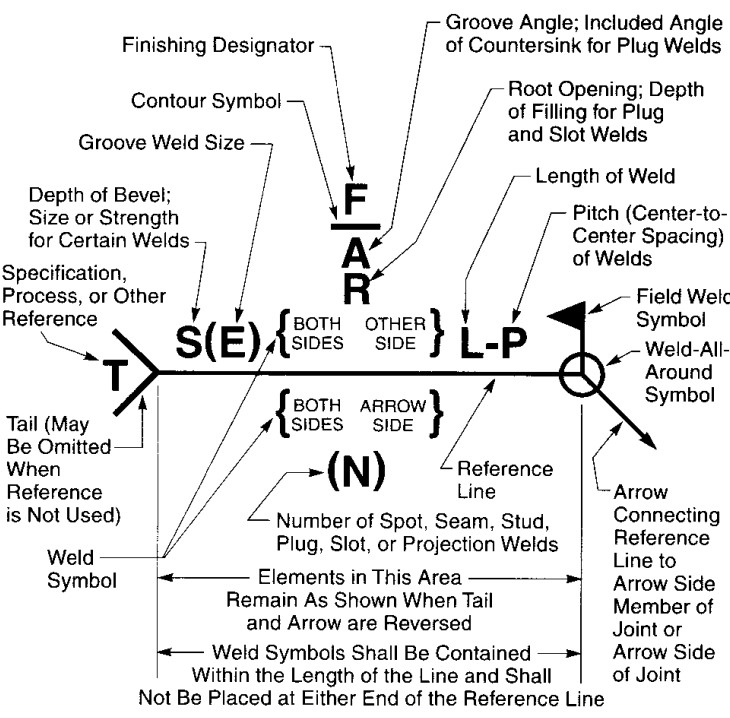
A general course in blueprint reading and welding symbols and their application. This course will cover visualization of objects and shapes, reading the blueprint for finding size and location dimensions, symbols, mathematics notes and related welding and assembly information shown on the print. This course further develops the student's understanding of how to read welding blueprints and develops the range of thinking required to assemble simple components and complex assemblies from welding prints.
- Teacher: Gary Gouin
The course includes the following units of instruction: Proper use and care of drafting instruments, triangles, scales, geometric curves; drawing geometry; freehand lettering; technical sketching; theory and principles of orthographic projection; basic and precision dimensions; primary auxiliary projection; sections; pictorial representation; and working drawings.
- Teacher: Dennis Svoke
- Teacher: Dennis Svoke